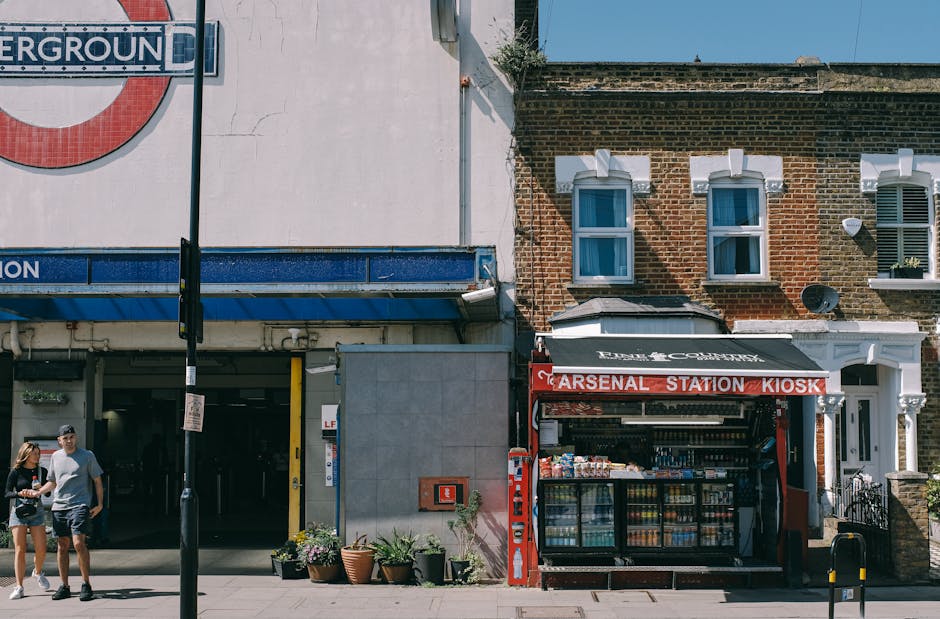
Woolwich Arsenal station removals access tips
If you are moving near Woolwich Arsenal station, the small details can make a big difference. A lift that is out of action, a loading bay that fills up fast, or a narrow side street can turn a straightforward removal into a slow, sweaty puzzle. These Woolwich Arsenal station removals access tips are designed to help you plan the move properly, avoid unnecessary delays, and make life easier for everyone involved.
Whether you are moving a flat close to the station, collecting bulky furniture, or arranging a business relocation, access planning is what keeps the day calm. It is the bit people often leave too late. And then, well, the van arrives and reality shows up with a parking problem.
In this guide, you will find practical advice on access checks, parking, timing, packing, building rules, and the best way to work with a removals team. You will also see where services like man and van support, house removals, and local removals help can make the whole process easier. No fluff, just the useful stuff.
Table of Contents
- Why access planning matters near Woolwich Arsenal station
- How removals access near the station works
- Key benefits and practical advantages
- Who this is for and when it makes sense
- Step-by-step guidance
- Expert tips for better results
- Common mistakes to avoid
- Tools, resources and recommendations
- Law, compliance, standards and best practice
- Options, methods and comparison table
- Case study or real-world example
- Practical checklist
- Conclusion
- Frequently asked questions
Why Woolwich Arsenal station removals access tips Matters
Station-area moves have a habit of looking simple on paper and then becoming awkward in the real world. Woolwich Arsenal is busy, well connected, and surrounded by mixed-use streets, apartments, older buildings, and modern developments. That mix is useful for living there, but it can be tricky on moving day.
The main issue is not just distance. It is access. Can the van stop close enough to the entrance? Is there a lift? Will the driver have space to turn safely? Are there time restrictions, resident permits, concierge rules, or shared entrances to work around?
These details matter because removal work is mostly about momentum. Once the flow is broken, everything slows down. Boxes get left in corridors. Furniture ends up waiting on the pavement. People start carrying items twice. And nobody enjoys that. Not even a very patient mover.
Good access planning protects your belongings, your neighbours, and your schedule. It can also reduce stress on the day itself. If you know where the vehicle can park, who has the keys, and which route is easiest from van to front door, you are already ahead of the game.
It is also worth saying that access planning is not only for huge house moves. A one-bedroom flat near the station can be more awkward than a larger property further out, simply because of traffic, entrance layout, or building rules. That is why Woolwich Arsenal station removals access tips are useful for all types of moves, not just the big ones.
Expert takeaway: Near a station, removals are won or lost on access details. If the van cannot stop safely and close enough, everything else becomes harder, slower, and more expensive.
How Woolwich Arsenal station removals access tips Works
Access planning starts before moving day, ideally while you are still comparing options. The process is pretty simple, but each step helps remove a little uncertainty.
First, map out the property and the route from street to door. Then look at the practical obstacles: steps, narrow halls, door widths, shared lobbies, lift size, loading restrictions, and whether the vehicle can legally stop nearby. From there, you can decide what kind of removal support you need and how many hands will be sensible.
For many customers, a smaller, flexible setup works well. A man with a van arrangement can be ideal for lighter loads or shorter distances, while larger family homes may need a more structured moving team or a dedicated moving van. If the property has several flights of stairs, awkward furniture, or a tight schedule, it may be worth considering a fuller removal service.
Next comes timing. Busy streets near stations can be noticeably harder during commuter peaks. Early starts often help, though not always. If you are moving from a block with managed access, the building might also have concierge hours or booking windows. In practice, the move usually goes best when access is checked against the schedule, not guessed from it.
Finally, build in a little margin. A realistic move near Woolwich Arsenal should allow for loading delays, lift waits, parking changes, and the odd missing box. A bit of slack is not wasted time; it is breathing room.
Key Benefits and Practical Advantages
When access is planned properly, the benefits are obvious very quickly. The move feels calmer, but it also runs better in ways you can measure on the day.
- Less carrying distance: fewer long trips from van to flat means less fatigue and fewer accidents.
- Faster loading and unloading: good vehicle positioning can save a surprising amount of time.
- Lower risk of damage: fewer narrow squeezes, fewer rushed turns, and fewer heavy lifts in awkward spaces.
- Better neighbour relations: tidy access planning keeps pavements, entrances, and shared spaces less chaotic.
- More accurate quotes: a removals company can price more fairly when access is clear.
- Reduced stress: which, let's face it, is half the battle on moving day.
There is also a practical money angle. Poor access can lead to extra time, extra labour, or the need for a larger vehicle than expected. Sometimes the move still happens fine, but the cost creeps up because of avoidable delays. That is why many people check pricing and quotes alongside access details. The quote is only as useful as the information behind it.
For higher-value or fragile items, good access can also help with safety and confidence. If a sofa has to be turned three times in a cramped stairwell, the odds of scuffing it rise quickly. If it can be taken straight out and loaded cleanly, that is much easier on everyone.
Who This Is For and When It Makes Sense
This kind of planning is useful for more people than you might think. If you are within walking distance of Woolwich Arsenal station, access is relevant whether you are moving house, relocating a small office, or shifting a few bulky items.
It makes particular sense if you are:
- moving from a flat with lifts, shared corridors, or tight stairwells
- living on a busy road near the station where stopping space is limited
- moving into a managed building with concierge or booking rules
- handling furniture that needs careful manoeuvring
- moving at peak commuter times or on a tight schedule
- using a house movers service for a full property relocation
- arranging office relocation services for a business near the station
It also makes sense if you are comparing self-managed loading with professional help. Some people only need transport. Others need a crew that can lift, protect, and organise the job efficiently. If you are not sure where you sit, that is normal. Most customers do not know until they look at the access properly.
A quick reality check helps. If you can carry a box from front door to vehicle in one smooth route without blocking anyone or wrestling with a staircase, great. If not, you probably want a more structured plan.
Step-by-Step Guidance
If you want the move to go smoothly, keep it simple and work through access like a checklist, not a guess.
- Walk the route in advance. Start at the front door and trace the path to where the van would stop. Note steps, gates, narrow corners, door swings, and any shared spaces.
- Check parking or stopping options. Can a vehicle legally wait outside? Is it a pay-and-display bay, a restricted zone, or a loading area? If you are unsure, plan conservatively.
- Measure awkward items. Sofas, wardrobes, mattresses, desk frames, and fridge-freezers often create the biggest access headaches. Measure them properly.
- Check the lift and stairwell. If there is a lift, see whether it is big enough for furniture and how it operates. If there is no lift, count the flights honestly.
- Ask the building about rules. Some managed buildings need advance notice, protective flooring, a deposit, or use of a service entrance. Better to ask before than apologise after.
- Plan packing by access. Put heavier, awkward items near the exit route in advance so they can go first or last as needed.
- Set the loading order. If the van is small or access is tight, the order of loading becomes important. Load the awkward pieces first while everyone still has energy.
- Allow time for arrival. Station traffic can be annoying, especially around commuting hours. Give the movers a proper window, not a rushed half-hour slot.
If you are using a professional team, share the access details early. Good removals crews can work around awkward layouts, but they need facts. Mention if there is no lift, if parking is limited, or if the entrance is around the back. Those tiny notes save a lot of confusion later.
And if there is one thing to remember: do not wait until the van is outside to discover the entrance is not where you thought it was. That one catches people more often than it should.
Expert Tips for Better Results
Here are the small things that tend to make a surprisingly big difference near station areas.
1. Move earlier in the day if you can
Morning moves usually have fewer parking headaches, and buildings are often quieter. It is not a magic fix, but it helps. By late morning, the street can feel tighter and the lift can become a waiting game.
2. Keep corridors clear
In flats and shared buildings, the safest move is the neat move. Keep hallways free from loose bags, shoes, recycling, and random "I'll carry that later" clutter. It sounds obvious. Still, people trip over one box every week somewhere in London.
3. Use colour labels for rooms
When access is cramped, you want boxes going to the right place first time. Colour labels or large room names on the side of boxes help loading teams work faster and reduce backtracking.
4. Protect the building, not just the furniture
Wall corners, banisters, lift doors, and floors all need attention. Blankets and floor protection may seem like extra effort, but they are cheaper than repairs. Most careful teams know this instinctively.
5. Keep one small essentials bag with you
Keys, chargers, water, snacks, documents, medication, and a roll of tape. Keep them nearby. It is easy to pack them away by accident. Then you are hunting for a kettle box at 9 pm. Been there, not fun.
6. Ask for the right vehicle size
Near station streets, bigger is not always better. A large vehicle might carry more, but it can be awkward to position. Sometimes a more manageable removal van is the smarter choice.
7. Match the service to the load
If the move is light and access is good, a simple van job may be enough. If the property is awkward or the load is substantial, use a more complete service. For heavier or more varied household contents, a house removals package may fit better than a basic transport-only booking.
Truth be told, the best access plan is usually the boring one: measured, checked, and repeated once more before the day. Boring is good here.
Common Mistakes to Avoid
Most access problems are avoidable. The trouble is, they only become obvious when the van is already there.
- Assuming the parking will "sort itself out" - it rarely does.
- Forgetting lift measurements - some furniture simply will not fit the way you hoped.
- Ignoring building rules - managed properties can be stricter than expected.
- Booking the wrong vehicle size - too small wastes trips; too big can be hard to park.
- Underestimating stairs - three flights with a wardrobe feels very different from three flights with a laundry basket.
- Not warning the removals team about awkward items - chunky sofas, glass tables, and tall bookcases need a plan.
- Packing too late - if boxes are still open when the crew arrives, the access plan loses momentum.
- Leaving the entrance cluttered - it slows the job and creates trip hazards.
One subtle mistake is forgetting to think about the destination as well as the pickup address. The arrival point may have a different layout, different parking, and different building access. Both ends matter. Always both.
Tools, Resources and Recommendations
You do not need a complicated toolkit, but a few simple things help a lot.
- Measuring tape: for furniture, doorways, lift dimensions, and stair turns.
- Masking tape or labels: for clear room marking.
- Protective covers and blankets: especially useful for furniture edges and tight hallways.
- Phone notes: for keeping access instructions, building contact details, and timing reminders in one place.
- Storage boxes or crates: sturdy packaging makes handling faster and safer.
- Van and loading plan: a rough plan for which items go in first prevents awkward reshuffling later.
On the service side, it helps to choose a team that understands local access conditions, building etiquette, and safe handling. If you need a broader, more managed move, look at removal company support, or for a smaller transport-led move, a straightforward man and van removals option may be enough.
You may also want to think about packing support if time is tight. Some moves are not hard because of the distance; they are hard because the packing is unfinished. In those cases, packing and unpacking services can remove a lot of pressure.
Law, Compliance, Standards and Best Practice
For removals near a station, compliance is mostly about common-sense safety and respecting local and building rules. You do not need to become a traffic warden overnight, but you do need to think responsibly.
In practical terms, that means parking legally, avoiding obstruction, keeping walkways clear, and making sure the job is handled safely for the crew and the public. If a vehicle needs to stop close to a building, that should be done in line with local restrictions and the property's own rules. If the building has a fire route, service entrance, concierge instructions, or loading policy, those should be followed.
Safe lifting practice matters too. Heavy items should be carried with enough people, with clear communication, and without rushing. This is not just good manners; it reduces the chance of injury and damage. Reputable teams usually work to their own health-and-safety procedures, and you can review the company's approach through its health and safety policy and insurance and safety information.
For commercial customers, access planning may also need to fit around office hours, building management, and business continuity. A proper commercial move often has more moving parts than a home move, even when the premises look simple from the outside.
Finally, if you are comparing providers, the sensible checks are usually the same: clear terms, transparent pricing, secure payment handling, and a straightforward complaints process if something goes wrong. That is just good practice, plain and simple.
Options, Methods and Comparison Table
Choosing the right move style near Woolwich Arsenal often comes down to access, load size, and how much help you want on the day.
| Option | Best for | Access fit | Pros | Trade-offs |
|---|---|---|---|---|
| Man and van | Smaller moves, quick collections, lighter loads | Good where parking is tight and flexibility matters | Flexible, usually simpler to arrange | May require more trips for larger loads |
| Removal van with team | Standard household moves | Strong choice for mixed access conditions | Better for stairs, bulky items, and planned loading | Can cost more than basic transport |
| Full removal service | Large homes, complex moves, time-sensitive jobs | Best for awkward buildings and fuller inventories | Most support, least stress | Usually the most expensive option |
| DIY hire and self-load | Very small moves with easy access | Only works well when parking and carrying are straightforward | Lower direct cost | More physical effort and more risk of delay |
If your property is near the station and access is already a bit awkward, the safest bet is often to choose the option that gives you more flexibility rather than less. A bargain booking can look clever right up until the first awkward landing.
Case Study or Real-World Example
Here is a realistic example from a typical local move. A customer was leaving a second-floor flat not far from Woolwich Arsenal station. The flat was tidy, the lift was small, and the street outside had limited stopping space. On the face of it, the move looked simple enough.
When the access was checked properly, a few useful details came up: the lift could take only one large item at a time, the front entrance had a narrow turning area, and the building preferred loads to be moved before mid-morning. None of that was a disaster, but together it meant the move would have been slow if nobody planned ahead.
So the loading order changed. The biggest furniture went out first. Boxes were grouped by room. The van arrived early, before the busiest stretch of the morning. The team kept the corridor clear and worked in short, tidy runs rather than trying to force everything through at once.
The move still took effort, of course. It always does. But it stayed controlled, and nobody had to stand in the doorway trying to balance a lamp while someone searched for a missing key. That is the sort of win you feel on the day.
The lesson is straightforward: the move did not become easy because the property was easy. It became manageable because the access was understood in advance.
Practical Checklist
Use this before moving day. Print it, save it, scribble on it. Whatever works.
- Check the exact entrance you will use.
- Measure doors, lifts, stair turns, and bulky furniture.
- Confirm where the van can legally stop.
- Ask about building rules, concierge hours, and service entrances.
- Tell the removals team about stairs, lifts, and awkward items.
- Pack and label boxes before the team arrives.
- Keep corridors, hallways, and the entrance clear.
- Prepare keys, access codes, and contact names.
- Plan for both pickup and delivery addresses.
- Allow extra time for parking, loading, and lift delays.
- Keep valuables and essentials with you.
- Review the company's terms and conditions before confirming the booking.
Conclusion
Woolwich Arsenal station removals access tips are really about one thing: making the move predictable. When you understand the parking, the building layout, the timing, and the load, the day gets a lot easier. Less rushing. Less lifting twice. Less standing around wondering where the trolley went.
Near a station, small access details can change everything, but they are manageable if you look at them early. Measure properly, ask the right questions, and choose the level of help that matches the reality of the property rather than the hope of it. That is how you keep the move sensible, safe, and much less stressful.
If you are still weighing up the best setup for your move, explore the most suitable local options and use the company's guidance on home moves, removals, and related support services to shape a plan that actually fits your building and your timeline.
Get a free quote today and see how much you can save.
And if all you do next is walk the route from your front door to the van space once, that is already a very good start. Small steps. Big difference.
Frequently Asked Questions
How do I know if access near Woolwich Arsenal station will be a problem?
If parking is limited, the entrance is shared, the lift is small, or the route from van to door is awkward, access is likely to matter. A quick walk-through usually reveals more than you expect.
Should I book a man and van or a full removals service?
For smaller loads and flexible access, a man and van can work well. If you have stairs, bulky furniture, or a fuller household move, a more complete removals service is usually the safer choice.
What details should I give the removals team before moving day?
Tell them about parking, lifts, stairs, building rules, entrance codes, and any large or fragile items. The more accurate the information, the more accurate the plan.
Can a removal van stop right outside my flat?
Sometimes yes, sometimes no. It depends on local restrictions, road layout, and building access. It is always better to check than to assume.
What if my building has no lift?
That is not unusual, but it changes the job. You may need extra time, more careful loading, and a service that can handle stairs properly.
Do I need to measure my furniture?
Yes. It sounds tedious, but it avoids the classic "it looked smaller in the room" problem. Measure beds, sofas, wardrobes, and anything awkward before the move.
Is early morning better for station-area removals?
Often it is. Streets can be calmer, parking is sometimes easier, and the day has more breathing room. That said, building rules still matter more than the clock alone.
What are the biggest access mistakes people make?
They underestimate parking, forget to check lift size, fail to warn the movers about stairs, and leave packing too late. Those are the usual culprits, every time.
Can I use packing help if I'm short on time?
Yes, and for many people it is a relief. Packing and unpacking support can make access planning easier because boxes are organised, labelled, and ready to go.
How do I compare removal quotes fairly?
Make sure each quote is based on the same access details, inventory size, and service level. If one quote is much lower, check what is missing before you decide.
What should I do if parking is extremely tight?
Choose a vehicle and service that can work flexibly, move a little earlier if possible, and make sure the team knows the parking constraints in advance. Tight parking is manageable when everybody knows the situation.
Are office moves near Woolwich Arsenal different from house moves?
Usually, yes. Office moves may involve building management, business hours, and equipment handling, so access planning becomes even more important.
Should I read the company's policies before booking?
It is a sensible idea. Policies on safety, insurance, payment, and terms help you understand how the move will be handled and what to expect if something changes.
What is the best single tip for moving near the station?
Check access in person before the move. Not online, not in your head, not from memory. On foot. It is the simplest way to catch the details that matter.